
When people think about moving, they worry about distance.
“How far is the new place?” “Will my things survive the journey?”
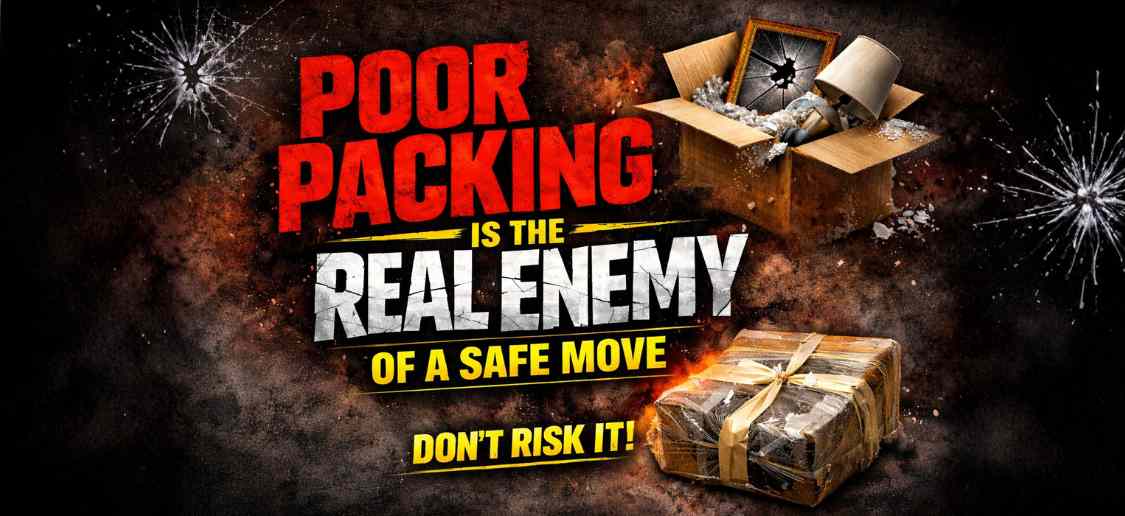
But the truth is uncomfortable and often ignored: most moving damage has nothing to do with distance. It happens because of poor packing.
A move can be just five kilometers away, and items can still arrive broken. At the same time, a move across cities can go smoothly—if packing is done right. That’s why poor packing is the real enemy of a safe move.
Damage Starts Before the Truck Moves
Many people assume damage happens on bad roads or during long travel. Damage usually starts before the truck even leaves.
Weak cartons, improper wrapping, unsealed boxes, and mixed packing of heavy and fragile items silently create problems. Once items are packed badly, no amount of careful driving can save them. Packing decides whether your belongings are protected or exposed.
Fragile Items Don’t Get a Second Chance
Glassware, electronics, kitchen items, mirrors, and décor pieces need more than just bubble wrap. They need correct layering, spacing, cushioning, and labeling
Poor packing leads to:
- Items knocking against each other
- Pressure damage inside boxes
- Moisture exposure
- Internal cracks that appear later
By the time you open the boxes, the damage is already done.
Furniture Suffers the Most from Bad Packing
Furniture damage is one of the biggest complaints during relocation. Scratches, broken edges, loose joints, and torn fabric usually happen because furniture is:
- Not dismantled properly
- Wrapped with low-quality material
- Loaded without edge protection
Good packing protects furniture structure. Poor packing weakens it permanently.
Cheap Packing Becomes an Expensive Mistake
Many people try to save money by choosing basic or rushed packing. But damaged items cost more than good packing ever will.
Broken electronics, ruined furniture, and lost valuables lead to:
- Replacement costs
- Repair expenses
- Insurance disputes
- Emotional stress
In the end, poor packing turns a planned move into an expensive regret.
Professional Packing Changes Everything
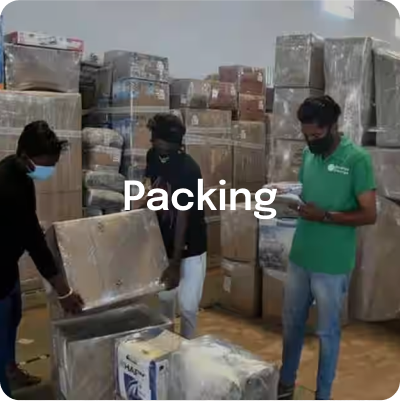
Professional packers don’t just “wrap items.” They follow a system.
Good packing includes:
- Item-specific packing methods
- High-quality packing materials
- Proper weight distribution
- Clear labelling and inventory tracking
This is why professional packers and movers focus more on packing than on speed or distance.
Why Xtended Space Takes Packing Seriously
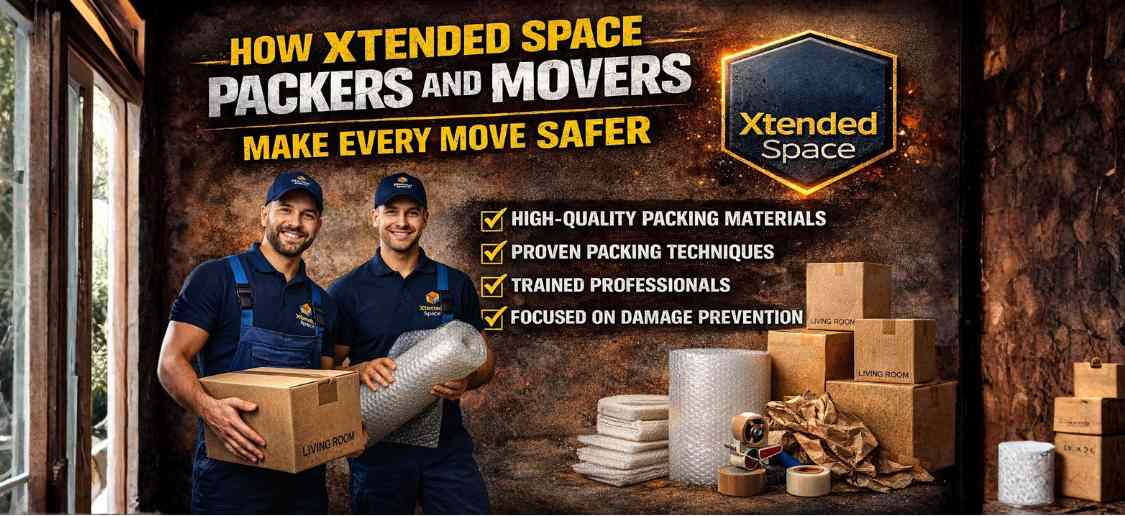
At Xtended Space, packing is treated as the foundation of a safe move. Every item is packed based on its nature, not convenience.
With trained teams, quality materials, and structured processes, Xtended Space ensures that belongings are protected before, during, and after transportation. Because once packing is done right, the move becomes smooth.
A Safe Move Is Built, Not Assumed
Safe movement doesn’t happen by luck. It happens because the packing was done properly. Distance doesn’t break your items. Roads don’t break your items. Poor packing does.
FAQs
- Why is packing more important than distance during a move?
Ans:Because damage usually occurs due to improper packing, rather than the length of travel. Even short moves can cause significant damage if the packing is done poorly. - Can I pack fragileitemssafely?
Ans: Basic items can be packed at home, but fragile, valuable, or heavy items should always be packed by professionals to avoid hidden damage. - What items need professional packing the most?
Ans:Glassware, electronics, appliances, furniture, artwork, mirrors, and kitchen items need professional packing. - Does good packing really reduce moving stress?
Ans:Yes. When items are packed securely, there is less fear of damage, fewer follow-ups, and a smoother unpacking experience. - How doesXtendedSpace ensure safe packing?
Ans: Xtended Space uses trained staff, quality packing materials, proper techniques, and clear labelling to ensure every item is handled safely.