
- Why Monsoon Is Tough on Stored Goods
- Monsoon Storage Checklist
- Mold Prevention: The 5-Minute Rule
- What About Wooden Furniture?
- What About Mattresses and Sofas?
- Electronics Need Extra Care
- The Biggest Mistake: Ignoring the Storage Environment
- What Should You Look for in a Professional Storage Facility?
- Professional Storage During Monsoon
- DIY Storage vs Professional Storage
- Monsoon Storage Checklist: Quick Version
- Final Thought
- Frequently Asked Questions
- Your Monsoon Rule

Monsoon has a way of finding every weak spot in your home.
A tiny leak behind the cupboard.
Condensation around the windows.
A damp mattress.
That strange smell coming from a box you haven’t opened in six months.
And then you discover it:
Mold.
For households and businesses storing furniture, clothing, documents, electronics or inventory, the monsoon season can create a completely different storage challenge.
It’s not simply about keeping things away from rain.
Humidity, condensation, poor ventilation, water leakage and pests can all damage stored belongings.
This becomes particularly important in cities such as Mumbai, Delhi NCR, Bengaluru, Pune, Chennai and Hyderabad, where seasonal humidity and rainfall can create difficult storage conditions.
So, whether you’re storing your furniture during a renovation, keeping seasonal clothes away from your apartment or moving business inventory into a storage facility, here’s a practical monsoon storage checklist to help protect your belongings.
Why Monsoon Is Tough on Stored Goods
Rain itself isn’t always the biggest threat.
The bigger problem can be moisture in the air.
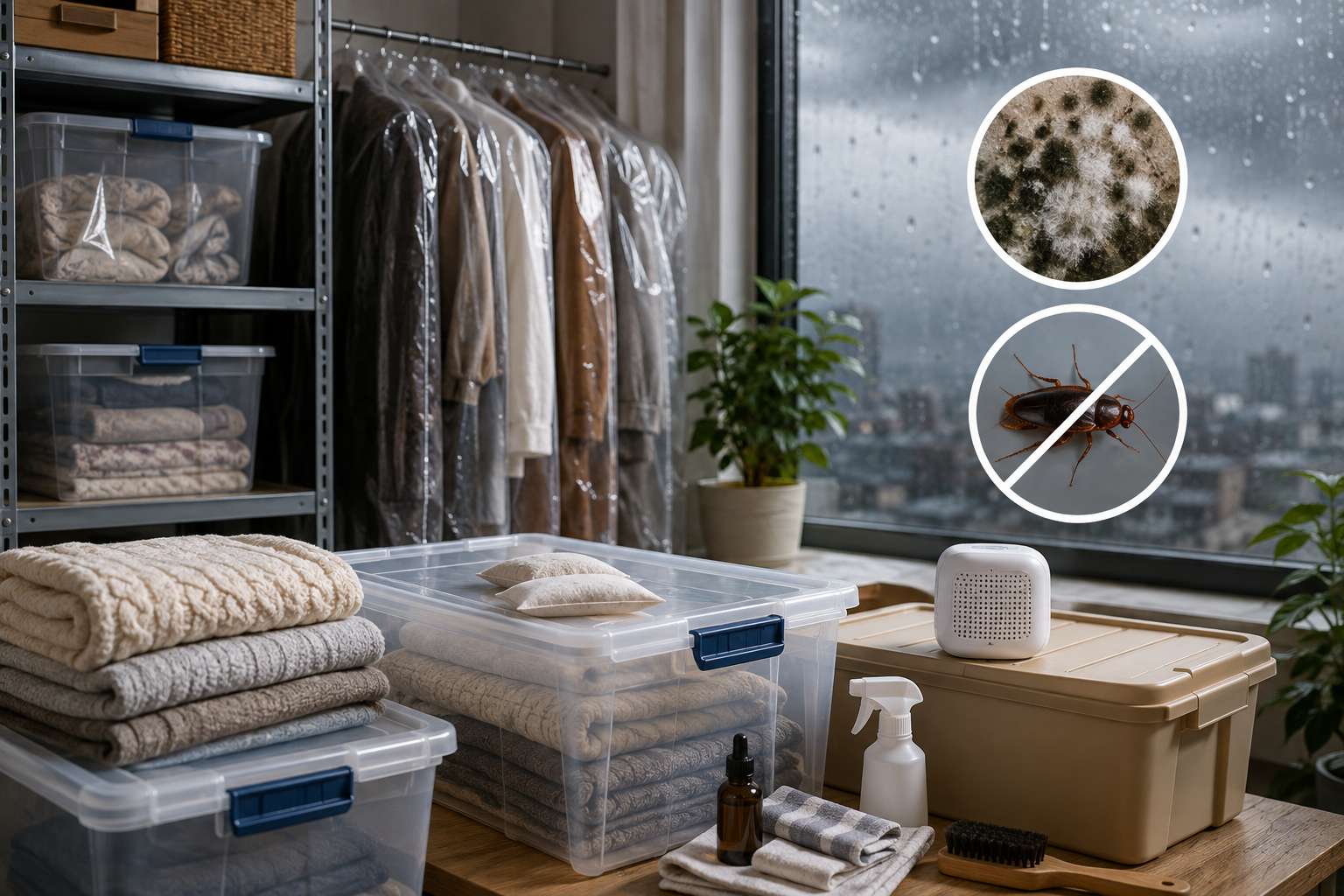
Warm, humid conditions can contribute to condensation and create an environment where mold and mildew can grow, particularly when belongings are packed tightly or stored in poorly ventilated areas.
Different materials react differently.
Wood
Can absorb moisture and may swell, warp or develop fungal growth under unsuitable conditions.
Fabric
Can retain moisture and develop unpleasant odours or mold.
Paper
Can absorb humidity, causing pages to become damp, warped or stained.
Leather
Can develop mold or surface damage in humid environments.
Electronics
Moisture and condensation can contribute to corrosion and electrical problems.
Cardboard
Can weaken significantly when exposed to moisture.
That’s why storing everything in a closed room and hoping for the best isn’t really a monsoon strategy.
Monsoon Storage Checklist
Before storing anything for several weeks or months, run through this checklist.
1. Clean Everything Before Storage
This sounds obvious.
But it’s one of the most important steps.
Food particles, dust, sweat, oil and dirt can attract pests and create conditions that make stored goods harder to maintain.
Before packing:
- Wash clothes
- Vacuum furniture
- Clean appliances
- Wipe plastic containers
- Remove food residue
- Clean wooden surfaces
- Dry everything completely
Never pack damp belongings.
Even slightly damp fabric inside a closed box can become a serious problem later.
2. Dry Items Completely
This deserves its own point.
A common mistake is washing something and immediately packing it because it “feels dry.”
During the monsoon, humidity can slow evaporation.
Before storage, make sure items are completely dry.
This is especially important for:
- Clothes
- Blankets
- Mattresses
- Carpets
- Wooden furniture
- Shoes
- Leather items
If possible, allow adequate drying time before packing.
3. Don’t Put Everything in Cardboard Boxes
Cardboard is convenient.
It’s cheap.
It’s easy to stack.
But it’s also vulnerable to moisture.
For longer-term monsoon storage, consider more moisture-resistant storage containers where appropriate.
For example:
Plastic storage boxes can be useful for many household items.
Fabric garment bags can be suitable for certain clothing.
Protective covers can help shield furniture from dust and moisture.
But remember:
A completely airtight container isn’t automatically better for every material.
Some items need appropriate ventilation and moisture management.
4. Keep Furniture Off the Floor
This is particularly important during heavy rainfall.
If a storage area experiences even a small amount of water ingress, items sitting directly on the floor are exposed first.
Where appropriate, use:
- Pallets
- Raised platforms
- Shelving
- Racks
This creates separation between stored goods and the floor.
It also makes cleaning easier.
For valuable furniture, this small precaution can make a big difference.
5. Give Furniture Breathing Space
Here’s a storage mistake people often make.
They cover a sofa tightly with plastic.
Then push it against the wall.
Then stack boxes around it.
Everything looks protected.
But you’ve potentially created a humid micro-environment.
Furniture should have appropriate clearance around it where possible.
Avoid packing stored items so tightly that air cannot circulate.
For fabric and wooden furniture especially, appropriate airflow and moisture control are important.
6. Use Moisture Absorbers Carefully
Moisture absorbers can be useful in enclosed storage containers.
Depending on the application, options include:
- Silica gel
- Commercial desiccant products
- Moisture absorber containers
They can help reduce moisture in enclosed spaces.
But they are not a replacement for fixing leaks, controlling humidity or ensuring items are dry before storage.
And don’t place chemicals or moisture-absorbing products directly against sensitive materials unless their instructions specifically allow it.
7. Protect Clothes From Monsoon Humidity
Clothing can be particularly vulnerable during humid weather.
Before storing seasonal clothes:
Wash them.
Dry them completely.
Fold them properly.
Use suitable garment bags or storage containers.
Avoid storing clothes in damp cupboards.
For premium clothing, silk, wool or wedding outfits, consider professional cleaning and appropriate packaging before long-term storage.
And here’s an important rule:
Don’t store dirty clothes.
Even tiny amounts of food, sweat or body oils can attract insects over time.
8. Protect Documents From Moisture
Important documents require extra attention.
Store them in appropriate folders or protective containers rather than loose cardboard cartons.
Consider keeping:
- Property papers
- Tax documents
- Contracts
- Business records
- Certificates
- Insurance documents
in moisture-protected storage.
For businesses, create a digital index showing which documents are in each box.
For example:
BOX 01 — FY 2023–24 — TAX DOCUMENTS
BOX 02 — FY 2024–25 — VENDOR CONTRACTS
BOX 03 — EMPLOYEE RECORDS
This makes retrieval much easier.
For legally or operationally important documents, businesses should also follow applicable retention and data-security requirements.
9. Don’t Store Food With Household Goods
This sounds simple.
But it’s surprisingly important.
Food attracts:
- Ants
- Cockroaches
- Rodents
- Other pests
Never use your storage area as a backup pantry.
Even sealed food packets can become a problem if damaged or forgotten.
If you’re using a professional storage facility, always check its rules regarding food and other restricted items.
10. Inspect for Existing Pests Before Storage
Don’t put a pest problem into storage.
Before packing furniture or household goods, check for:
- Termites
- Cockroaches
- Silverfish
- Moths
- Rodents
Look carefully around wooden furniture, mattresses, cupboards and boxes.
If you discover an infestation, treat it before storage.
Mold Prevention: The 5-Minute Rule
Before storing anything, ask five questions:
Is it clean?
Is it completely dry?
Is it protected?
Is it raised from the floor?
Can moisture and pests be controlled?
If the answer to all five is yes, you’re already significantly reducing common storage risks.
What About Wooden Furniture?
Wooden furniture deserves special attention during monsoon.
Avoid storing it:
- Against damp walls
- Directly on wet floors
- In areas with visible leaks
- Under dripping AC units
- In poorly ventilated spaces
Before storage, clean and dry the furniture.
Use suitable furniture covers that provide protection without trapping excessive moisture.
If you’re storing expensive solid-wood furniture for a long period, follow the manufacturer’s or conservator’s recommendations for humidity and care.
What About Mattresses and Sofas?
These are among the most difficult household items to store.
Why?
Because they contain absorbent materials.
If moisture gets inside, simply wiping the surface won’t solve the problem.
Before storage:
- Vacuum thoroughly
- Ensure they’re completely dry
- Use suitable breathable protective covers
- Keep them elevated where appropriate
- Avoid direct contact with damp walls or floors
For long-term storage, professional storage facilities can be preferable because they may provide better-controlled conditions than a damp garage, basement or spare room.
Electronics Need Extra Care
Do not assume a plastic cover makes electronics safe.
For electronics:
- Clean before storage
- Remove batteries where appropriate
- Back up important data
- Use original packaging if available
- Protect against dust
- Avoid damp environments
- Follow manufacturer storage instructions
For sensitive electronics, climate-controlled storage may be worth considering depending on the equipment.
The Biggest Mistake: Ignoring the Storage Environment
You can buy the best boxes in the world.
You can wrap your sofa perfectly.
You can add silica gel.
But if the storage facility has:
water leakage + high humidity + poor pest control
your belongings are still at risk.
This is why the storage environment matters as much as the packaging.
What Should You Look for in a Professional Storage Facility?
If you’re storing goods during monsoon, don’t simply ask:
“How much does storage cost?”
Ask:
Is the facility monitored?
Look for CCTV and controlled access.
How is moisture managed?
Ask about ventilation, humidity and water protection.
Is pest control performed?
Especially important during humid weather.
Are goods stored off the floor?
Ask how furniture and boxes are positioned.
Is inventory tracked?
A proper inventory system helps prevent confusion.
Is pickup and delivery available?
This can eliminate the hassle of transporting large furniture yourself.
What happens if goods are damaged?
Understand insurance and liability terms.
Professional Storage During Monsoon
If you’re renovating your home, relocating or simply trying to free up space during the rainy season, professional storage can remove several environmental and logistical headaches.
Xtended Space offers furniture, household and warehouse storage solutions, with inventory management, pickup and delivery options and security features including CCTV and restricted access.
Its furniture-storage service is designed for items such as sofas, beds, mattresses, tables and other household belongings.
For businesses, warehouse storage can also provide space for inventory and equipment outside the office.
The key benefit isn’t just extra space.
It’s having a storage environment managed specifically for stored belongings.
DIY Storage vs Professional Storage
Factor | Home/DIY Storage | Professional Storage |
|---|---|---|
Space | Limited | Dedicated |
Pest management | Your responsibility | Facility-dependent |
Security | Home-level | Typically controlled facility |
Inventory tracking | Manual | May be digital/barcoded |
Large furniture movement | Difficult | Pickup may be available |
Scalability | Limited | Usually more flexible |
Monsoon protection | Depends on premises | Depends on facility infrastructure |
Professional storage isn’t automatically better for every item or every household.
But for valuable furniture, business inventory or long-term storage, it can be worth comparing.
Monsoon Storage Checklist: Quick Version
Before you store anything this rainy season:
☑ Clean everything
☑ Dry everything completely
☑ Check for pests
☑ Use appropriate protective packaging
☑ Keep goods off the floor
☑ Avoid damp walls
☑ Don’t overcrowd storage
☑ Use suitable moisture-control products
☑ Keep documents organised
☑ Back up important digital data
☑ Check the storage facility for leaks and pest control
☑ Maintain an inventory list
☑ Understand insurance and liability
☑ Plan how you’ll retrieve items later
Final Thought
Monsoon doesn’t have to mean opening a storage box six months later and discovering a completely different ecosystem inside.
The secret is surprisingly simple:
Dry. Protect. Elevate. Organise. Monitor.
And if your home simply isn’t suitable for storing furniture, documents or inventory during India’s humid months, don’t force it.
Sometimes the smartest storage solution is the one that moves your belongings out of the monsoon-prone environment altogether.
Need safe storage during monsoon?
Xtended Space provides storage solutions for furniture, household belongings and business inventory, along with pickup and delivery options.
Don’t let monsoon damage the things you’ve spent years collecting.
👉 Get a storage quote from Xtended Space today.
Frequently Asked Questions
1. How do I protect furniture from mold during monsoon?
Keep furniture completely dry, away from damp walls and floors, and ensure adequate airflow. Appropriate protective covers can help, but avoid trapping moisture underneath them.
2. How do I prevent pests in stored furniture?
Clean furniture thoroughly before storage, remove food residue, inspect for existing infestations and choose a facility with an established pest-control programme.
3. Can I store clothes during monsoon?
Yes. Clothes should be washed and completely dried before storage. Use suitable garment bags or containers and avoid damp storage environments.
4. Can cardboard boxes protect belongings during monsoon?
Cardboard can be vulnerable to humidity and water. For longer-term storage, consider moisture-resistant containers where appropriate.
5. How should documents be stored during the rainy season?
Use suitable protective folders or containers, keep documents away from moisture and organise them with clear labels. Important business records should also be managed according to applicable retention and security requirements.
6. Should furniture be covered with plastic during monsoon?
Protective covers can help against dust, but completely sealing some furniture in plastic may trap moisture. Choose appropriate covers and maintain suitable airflow.
7. Does humidity cause mold?
High humidity can create conditions favourable to mold growth, especially when combined with damp materials and poor ventilation.
8. How should mattresses be stored during monsoon?
Clean and completely dry the mattress before storage. Use an appropriate protective cover and keep it elevated and away from damp surfaces.
9. Is professional storage safer during monsoon?
It can be, depending on the facility. Look for water protection, pest control, security, inventory management and suitable environmental conditions.
10. What should I never store in a damp area?
Avoid storing paper documents, clothing, mattresses, wooden furniture, leather products and electronics in areas exposed to persistent dampness or water leakage.
Your Monsoon Rule
If you wouldn’t leave it outside during a Mumbai downpour, don’t leave it unprotected in a damp storage room either.
Protect your belongings before the humidity becomes a problem.
Xtended Space — More room for what matters.