
India’s MSMEs are the backbone of the economy, yet one silent problem eats into their profits every single month—warehouse inefficiency. Like inventory spilling over with no space left, expensive warehouses sit half empty, draining money without adding value.
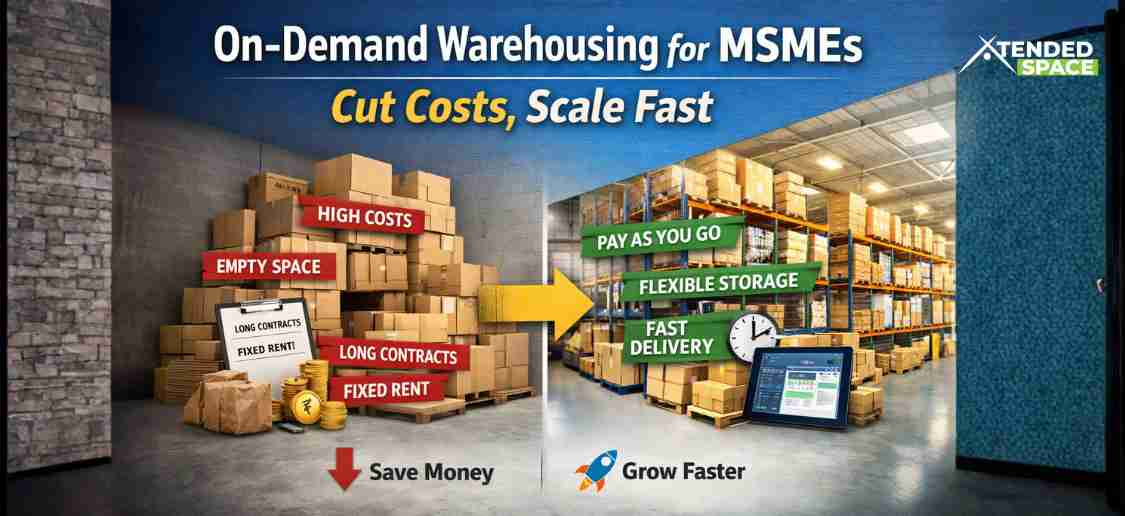
Fixed rentals, long-term lock-ins, high security deposits, and rising operational costs make traditional warehousing a risky decision for small businesses. One wrong commitment can block cash flow, slow growth, and delay deliveries.
This is exactly why on-demand warehousing is no longer optional for Indian MSMEs. It offers flexibility, cost control, and speed. These small businesses urgently need to survive and scale.
The real challenges MSMEs face and how on-demand warehousing solves them.
Problem 1: Fixed Warehouse Costs Drain Monthly Profits
Traditional warehouses demand:
- Long-term lease agreements
- Heavy security deposits
- Fixed monthly rent
- Maintenance, utilities, and staffing costs
Even when inventory is low, the expenses stay the same. For MSMEs, this locks capital that could otherwise be used for growth, marketing, or production.
Solution: Pay Only for the Space You Actually Use
On-demand warehousing removes fixed commitments. MSMEs use space as needed, pay only for the duration required, and stay financially agile without pressure.
Problem 2: Inventory Levels Change Every Month
Festive seasons, bulk orders, flash sales, and sudden demand spikes make inventory unpredictable. Traditional warehouses don’t adjust —MSMEs either run out of space or overpay for unused storage.
Solution: Scale Up or Down Instantly
On-demand warehousing lets businesses:
- Increase space during peak demand.
- Reduce storage during slow months.
- Stop storage when not required.
This flexibility prevents waste and supports seasonal business cycles without stress.
Problem 3: Lack of Technology Leads to Stock Losses
Many MSMEs still deal with:
- Manual inventory records
- No real-time visibility
- Missing or misplaced stock
- Dispatch errors
These issues cause delays, customer complaints, and revenue loss.
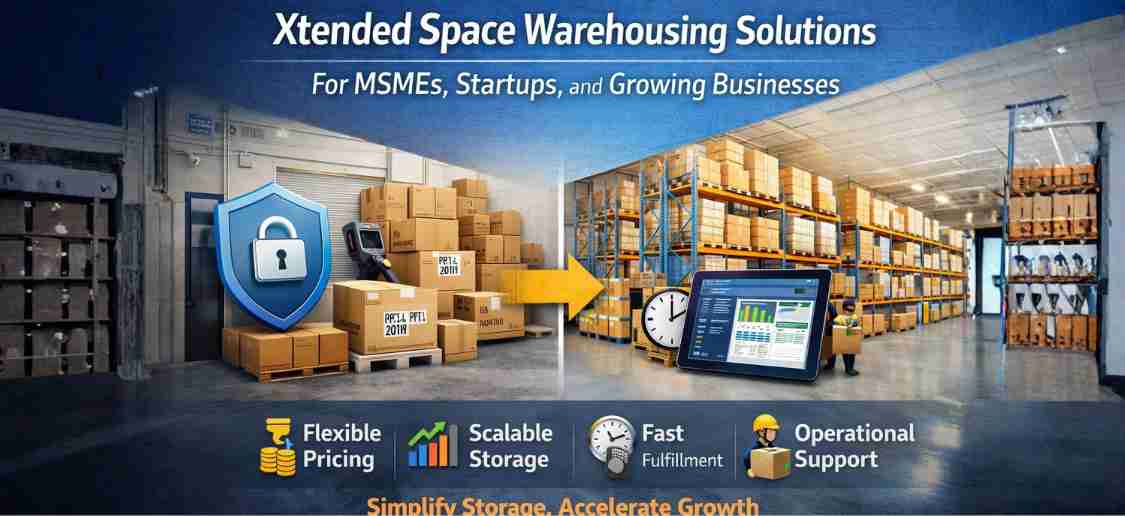
Solution: Smart, Tech-Enabled Warehousing
Modern on-demand warehouses offer:
- Real-time inventory tracking
- Barcode or RFID systems
- Digital dashboards
- Accurate order management
MSMEs get full control and visibility without investing in expensive software.
Problem 4: Slow Deliveries Hurt Customer Trust
Warehouses located far from customers increase delivery time and logistics costs. Delays directly impact repeat orders and brand credibility.
Solution: Faster Deliveries with Strategic Locations
On-demand warehouse networks are positioned near:
- Urban centres
- High-demand zones
- Industrial clusters
This shortens delivery timelines and improves customer satisfaction.
Problem 5: Managing Staff and Operations Is Overwhelming
Hiring, training, and managing warehouse staff is time-consuming and costly for MSMEs.
Solution: End-to-End Operational Support
On-demand warehousing includes:
- Trained manpower
- Inventory handling
- Loading and dispatch support
Business owners focus on growth while operations run smoothly.
FAQs
- What is on-demandwarehousing?
Ans: It’s a flexible storage model where businesses pay only for the space and duration they use, without long-term commitments. - Is on-demand warehousing suitable forMSMEs?
Ans: Yes. It reduces costs, supports demand fluctuations, and improves operational efficiency. - Can e-commerce sellers use on-demandwarehousing?
Ans: Absolutely. It helps manage inventory, speed up deliveries, and scale during peak seasons. - Is it cheaper than traditionalwarehousing?
Ans: For most MSMEs, yes—there are no fixed rents, deposits, or staffing overheads. - Can storage space be changedanytime?
Ans: Yes. You can expand, reduce, or stop storage as your business needs change.